
Shoulder Impingement (Rotator Cuff-Related Pain)
Relieve shoulder pain and restore comfortable movement with personalised, evidence-based treatment focused on reducing irritation, improving strength, and helping you return to daily activities and sport.
Understanding Shoulder Impingement
Shoulder Impingement Syndrome — also termed Subacromial Pain Syndrome or Rotator Cuff-Related Pain — occurs when the rotator cuff tendons or subacromial bursa are compressed within the shoulder joint. It is one of the most common causes of shoulder pain, affecting a wide range of people from manual workers to desk workers and overhead athletes.
Causes
- Repetitive overhead activity – swimming, throwing, painting, and manual work.
- Poor posture – rounded shoulders narrowing the subacromial space.
- Rotator cuff muscle weakness and imbalance.
- Scapular instability altering shoulder mechanics.
- Structural changes – bone spurs or acromial morphology.
- Rotator cuff tendon degeneration.
Symptoms
- Pain at the front, side, or back of the shoulder.
- Pain when reaching overhead, behind the back, or to the side.
- A painful arc of movement between 60 and 120 degrees of elevation.
- Difficulty sleeping on the affected shoulder.
- Weakness when lifting or reaching.
- Stiffness and reduced range of motion.
Treatment
- Manual therapy and shoulder joint mobilisation.
- Rotator cuff and scapular stabiliser strengthening.
- Postural correction and ergonomic education.
- Activity modification and progressive return to sport.
- Home exercise program.
Rehabilitation & Exercise
- Shoulder isometric exercises – internal and external rotation, flexion, and extension contractions.
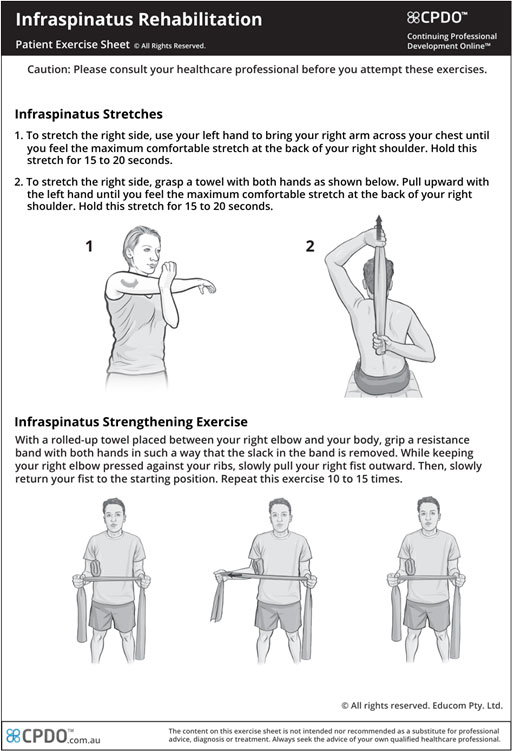
- Resistance band shoulder external rotation – to restore rotator cuff balance.
- Scapular retraction and depression exercises – to improve shoulder stability.
- Shoulder stretches – targeting the deltoid, pectoral, triceps, and biceps.
- Sleeping posture guidance – to reduce night pain.
- Progressive overhead strengthening – as symptoms allow.


Specialist & Regenerative Medicine Options
Where shoulder impingement has progressed to significant tendon degeneration or persistent bursal inflammation, our Prestidge sports physicians can offer targeted specialist treatments.
- Corticosteroid Injections – subacromial injections provide effective short-term pain relief, allowing rehabilitation to progress.
- Platelet Rich Plasma (PRP) Therapy – ultrasound-guided PRP into the subacromial space or rotator cuff tendon to support healing.
- Hyaluronic Acid – where glenohumeral joint involvement is present, viscosupplementation helps reduce friction.
- Prolotherapy – for shoulder ligamentous laxity and chronic instability.
- Peptide Therapy – where clinically appropriate following individual assessment. A valid prescription is required.
- Stem Cell Therapy – for significant rotator cuff degeneration within TGA guidelines.
Our sports and exercise physicians at Prestidge work alongside your treating clinician to determine the most appropriate option for your condition, goals, and stage of recovery. All injectable and prescription treatments are subject to individual clinical assessment. Visit healthweave.com.au or prestidge.com.au to learn more.
Important: All specialist consultations, prescription treatments, and injectable procedures are subject to individual clinical assessment by a registered medical practitioner. Suitability, benefits, and risks will be discussed at your consultation. No outcomes are guaranteed. Prescription medicines are only available following appropriate medical review in accordance with TGA and AHPRA requirements. Exercise programs should be performed only as directed by your Healthweave clinician. Exercise images © CPDO / Educom Pty. Ltd. — used under licence.