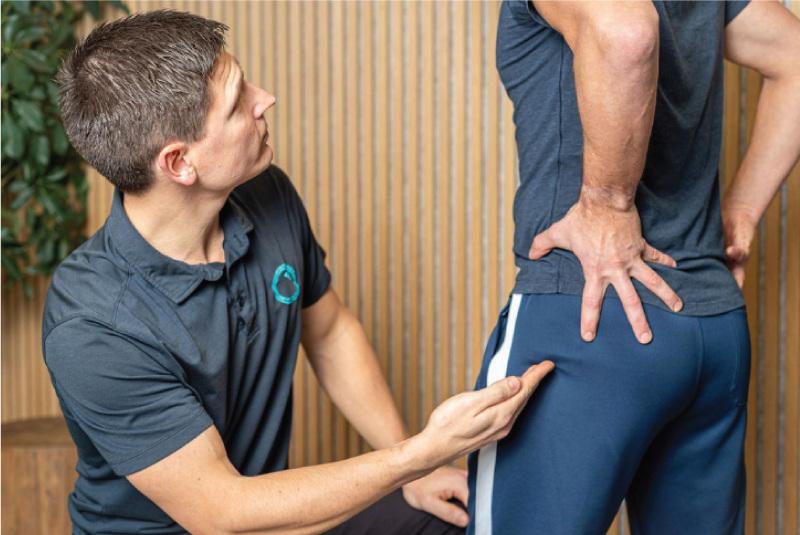
Piriformis Syndrome
Piriformis syndrome occurs when the piriformis muscle compresses the sciatic nerve, causing buttock pain and sciatica-like symptoms. Physiotherapy, stretching, strengthening, and targeted treatments help relieve pain.
Understanding Piriformis Syndrome
Piriformis syndrome occurs when the piriformis muscle — a deep muscle in the buttock —
becomes tight or goes into spasm, compressing the sciatic nerve as it passes nearby. This
causes buttock pain and sciatica-like symptoms down the back of the leg. It is often overlooked
and mistaken for lumbar disc or nerve root pathology.
Causes
- Poor abdominal, gluteal, and core muscle strength
- Lower back dysfunction leading to piriformis overactivation
- Prolonged sitting — particularly on hard or uneven surfaces
- Overuse from running or cycling
- Direct trauma to the buttock
Symptoms
- Deep aching pain in the buttock
- Pain radiating down the back of the thigh and into the calf
- Worsening with prolonged sitting, squatting, or driving
- Restricted hip internal rotation
- Occasional numbness or tingling in the leg
Diagnosis
Clinical assessment includes hip movement testing, palpation of the piriformis, and specific
provocation tests. MRI or nerve conduction studies may be arranged to exclude lumbar disc
pathology.
Treatment
Treatment focuses on releasing the piriformis, correcting the underlying cause, and restoring hip
and core strength. Most patients improve significantly within four to six weeks of targeted care.
- Manual therapy and myofascial release of the piriformis
- Hip flexor and piriformis stretching
- Core and gluteal strengthening
- Activity modification and ergonomic advice
- Dry needling or trigger point therapy
Rehabilitation & Exercise
Caution: Perform all exercises only as directed by your Healthweave clinician. Stop any exercise
that increases your pain and inform your practitioner. Exercise programs are tailored to
individual needs and must not be self-prescribed.
Rehabilitation for piriformis syndrome includes targeted stretching of the piriformis and hip
external rotators, combined with core and gluteal strengthening to address the underlying
muscle imbalances.
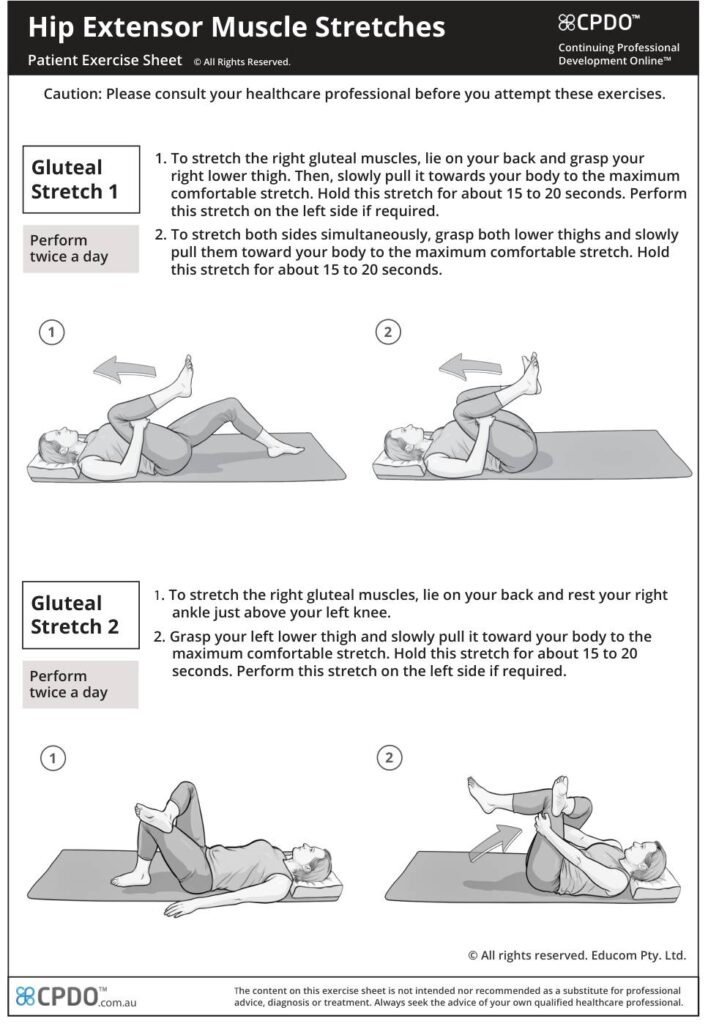
- Piriformis and hip external rotator stretching — performed within comfortable range
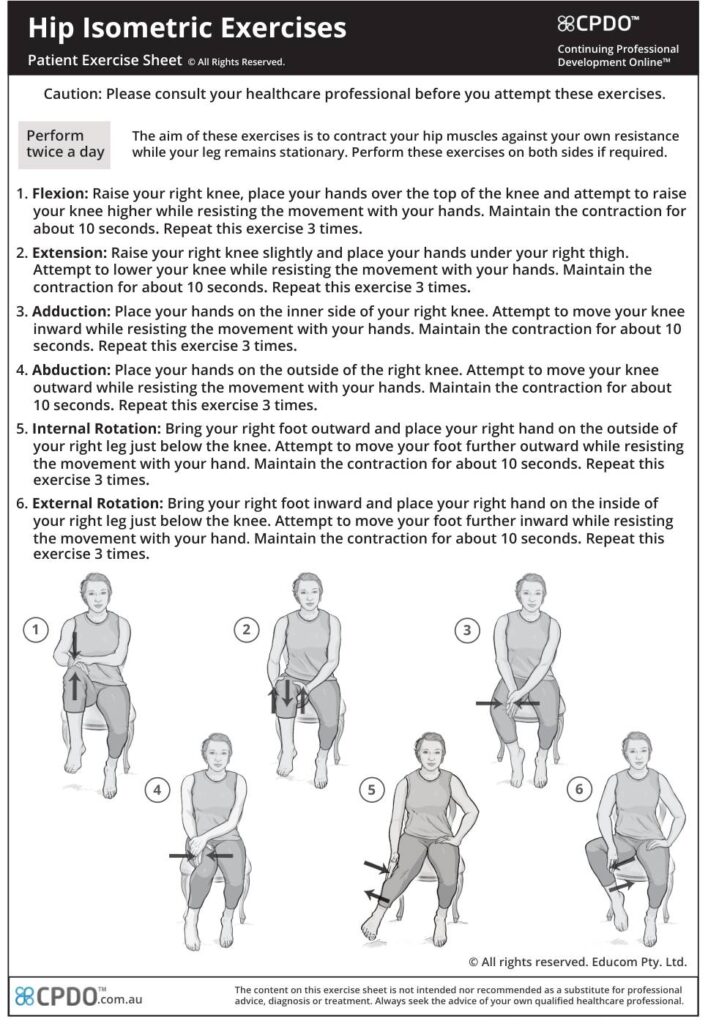
- Hip isometric exercises to reactivate hip muscles without aggravating the piriformis
- Progressive gluteal and core strengthening
- Postural correction exercises for seated and standing posture
- Regular breaks from prolonged sitting — stand and walk for several minutes each hour
Specialist & Regenerative Medicine Options
For severe or persistent piriformis syndrome, our Prestidge sports physicians can offer targeted
injectable and regenerative treatments.
- Corticosteroid or PRP Injections — Image-guided injection into the piriformis muscle reduces localised inflammation and sciatic nerve irritation.
- Botulinum Toxin (Botox) Injections — In refractory cases, temporary muscle relaxation via Botox can relieve sciatic nerve compression for several months.
- Prolotherapy — To address sacroiliac and hip ligamentous laxity contributing to piriformis overactivation.
- Dry Needling under Ultrasound Guidance — Precise needling of trigger points for immediate reduction in muscle tone.
Our sports and exercise physicians at Prestidge work alongside your treating clinician to
determine the most appropriate option for your condition, goals, and stage of recovery. All
injectable and prescription treatments are subject to individual clinical assessment. Visit
healthweave.com.au or prestidge.com to learn more.
Important: All specialist consultations, prescription treatments, and injectable procedures are subject to individual clinical assessment by a registered medical practitioner. Suitability, benefits, and risks will be discussed at your consultation. No outcomes are guaranteed. Prescription medicines are only available following appropriate medical review in accordance with TGA and AHPRA requirements. Exercise programs should be performed only as directed by your Healthweave clinician. Exercise images © CPDO / Educom Pty. Ltd. — used under licence.
Prevention Tips
- Take regular breaks from prolonged sitting
- Incorporate daily piriformis and hip stretches
- Maintain hip and core strength
- Address lower back dysfunction early
- Check running technique and footwear