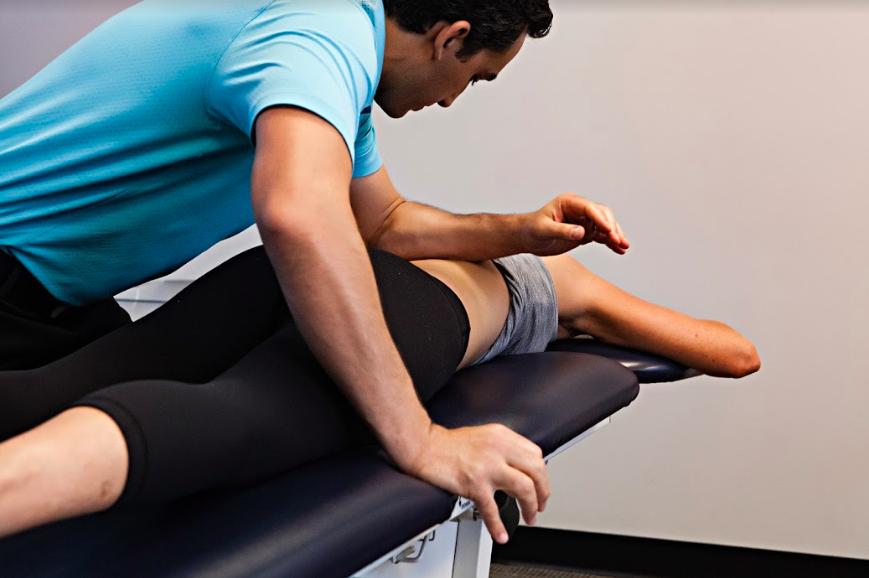
Tensor Fasciae Latae (TFL) Myofascial Pain Syndrome
Understanding TFL Myofascial Pain Syndrome
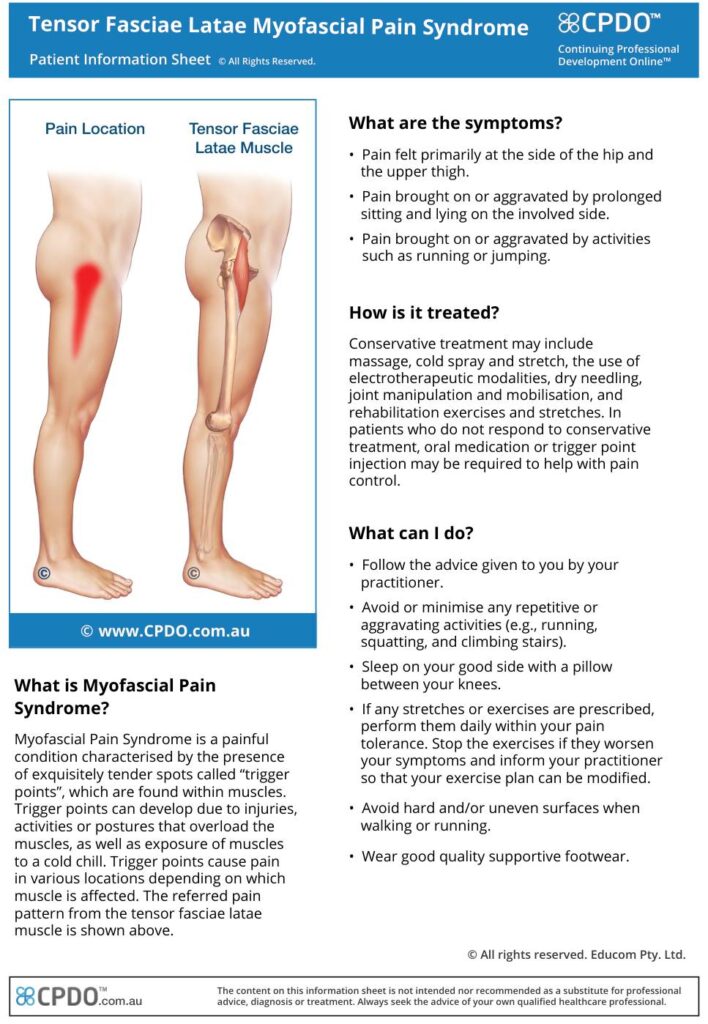
The tensor fasciae latae (TFL) is a small but important muscle at the outer hip that connects to the iliotibial (IT) band and plays a key role in stabilising the hip and knee during walking and running. Myofascial pain syndrome occurs when trigger points develop within the TFL muscle, causing characteristic pain patterns at the side of the hip and outer thigh.
Causes
- Activities involving repetitive hip flexion — running, jumping, and cycling
- Prolonged sitting or lying on the affected side
- Overloading the TFL due to weak gluteal muscles
- Cold exposure or sudden muscle overload
- Altered lower limb biomechanics or leg length discrepancy
Symptoms
- Pain at the side of the hip and upper outer thigh
- Pain aggravated by prolonged sitting, running, or climbing stairs
- Tenderness along the outer hip and thigh
- Referred pain pattern extending down the outer leg
Treatment
- Manual and myofascial therapy release of the TFL and IT band
- Dry needling of TFL trigger points
- Hip abductor and gluteal strengthening to reduce TFL overloading
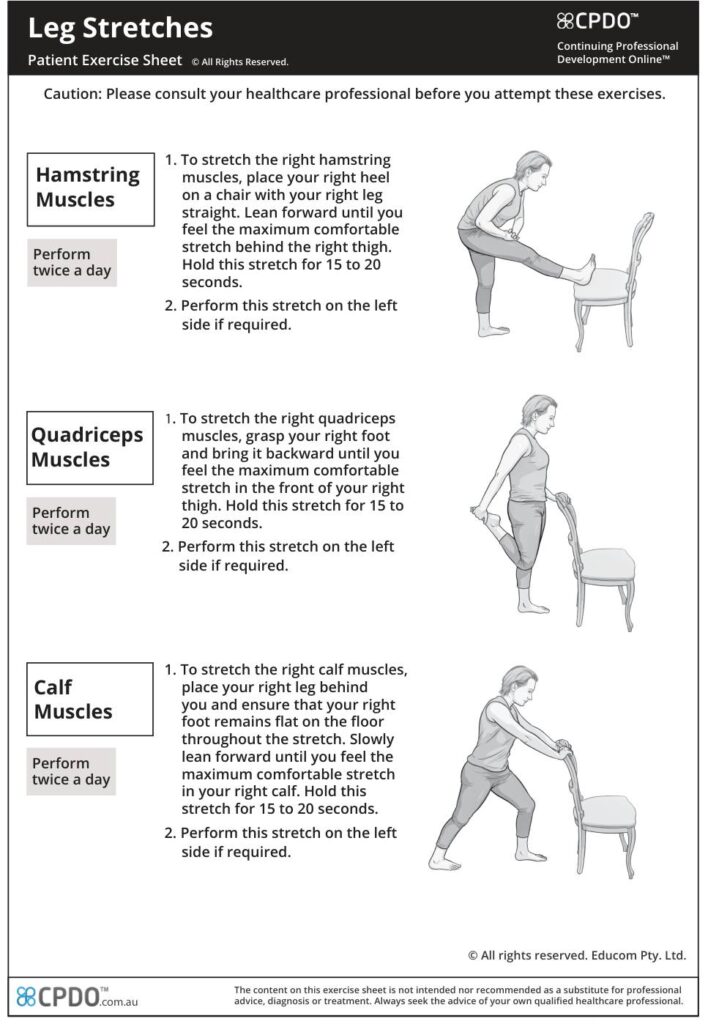
- Stretching of the TFL, IT band, and hip flexors
- Activity modification and footwear advice
Rehabilitation & Exercise
Caution: Perform all exercises only as directed by your Healthweave clinician. Stop any exercise that increases your pain and inform your practitioner. Exercise programs are tailored to individual needs and must not be self-prescribed.
Rehabilitation targets TFL trigger points, restores normal muscle balance, and corrects
movement patterns. Avoid aggravating activities such as prolonged sitting on hard surfaces, running on camber roads, or lying on the affected side.
- TFL and IT band stretching to reduce muscle tension
- Hip abductor strengthening to offload the TFL
- IT band foam rolling — with clinician guidance
- Activity and training load modification
- Correction of contributing biomechanical factors, including footwear