Knee Ligament Injuries (ACL, PCL, MCL, LCL)
Understanding Knee Ligament Injuries
Causes
- Sudden twisting or pivoting movements
- Direct impact to the knee
- Awkward landings from height
- Falls or motor vehicle accidents
- Excessive valgus or varus stress at the knee
Symptoms
- A popping sensation at the time of injury
- Immediate significant knee pain
- Swelling developing within 24 hours
- Instability — the knee feeling like it may give way
- Difficulty bearing weight
Diagnosis
Treatment
- Early pain and swelling management (ice, rest, compression, elevation)
- Progressive rehabilitation targeting quadriceps, hamstrings, and gluteals
- Neuromuscular and proprioceptive retraining
- Return-to-sport conditioning and agility training
- Post-surgical rehabilitation following ligament reconstruction
Rehabilitation & Exercise
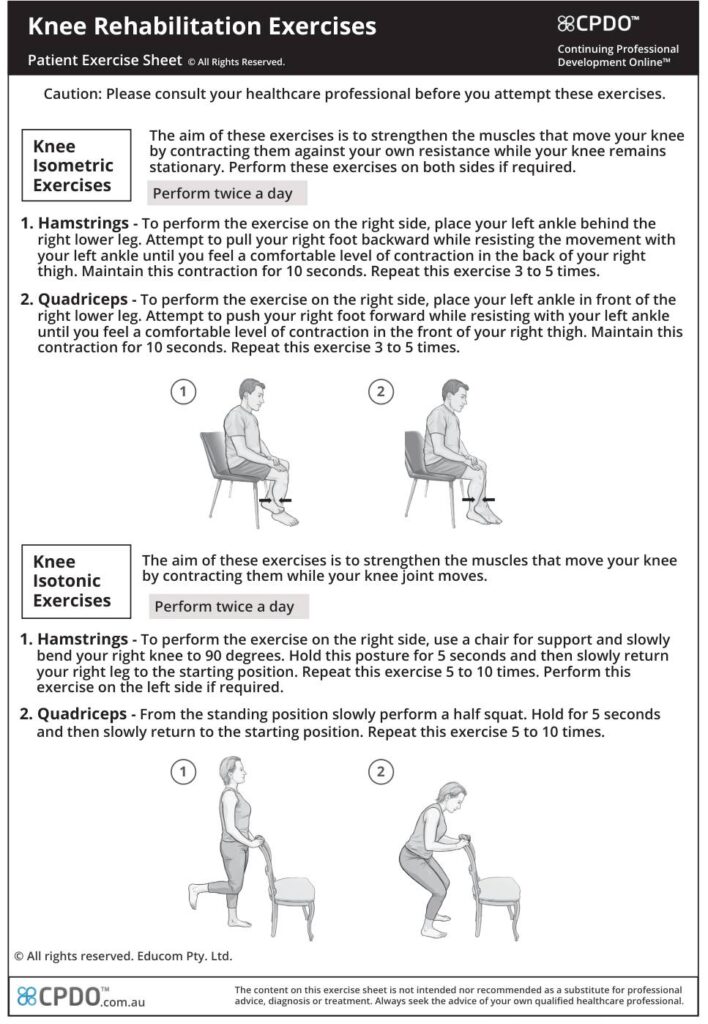
Caution: Perform all exercises only as directed by your Healthweave clinician. Stop any exercise that increases your pain and inform your practitioner. Exercise programs are tailored to individual needs and must not be self-prescribed.
- Isometric quadriceps and hamstring activation in the early phase
- Progressive knee strengthening — hamstring curls, half squats, and step exercises
- Hip and core strengthening to support knee stability
- Balance and proprioception exercises
- Sport-specific agility and return-to-activity drills
Specialist & Regenerative Medicine Options
- Platelet Rich Plasma (PRP) therapy — image-guided PRP injection to the ligament injury site to deliver growth factors supporting collagen repair
- Prolotherapy — injection into ligamentous structures to stimulate healing and improve joint stability
- Corticosteroid injections — selective use for acute swelling management to allow earlier rehabilitation
- Stem cell therapy — for significant ligament degeneration within TGA guidelines
Important: All specialist consultations, prescription treatments, and injectable procedures are subject to individual clinical assessment by a registered medical practitioner. Suitability, benefits, and risks will be discussed at your consultation. No outcomes are guaranteed. Prescription medicines are only available following appropriate medical review in accordance with TGA and AHPRA requirements. Exercise programs should be performed only as directed by your Healthweave clinician. Exercise images © CPDO / Educom Pty. Ltd. — used under licence.
Prevention Tips
- Maintain quadriceps and hamstring strength balance
- Include neuromuscular and balance training in fitness programs
- Use proper technique in pivoting and landing movements
- Warm up and cool down thoroughly
- Wear appropriate footwear for your sport