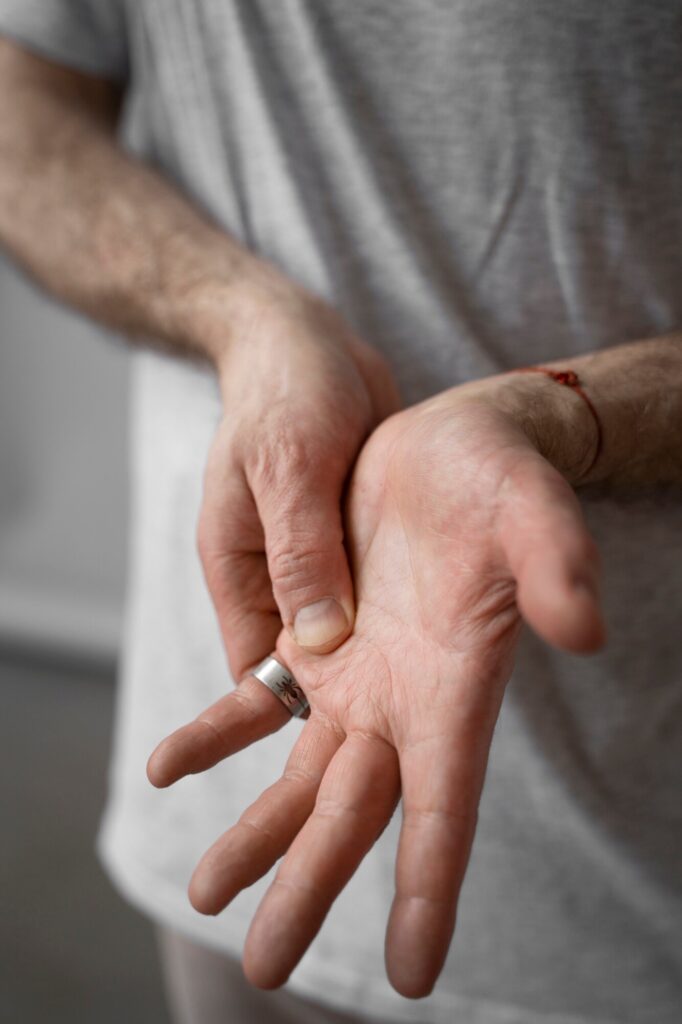
Carpal Tunnel Syndrome
Understanding Carpal Tunnel Syndrome
Carpal Tunnel Syndrome (CTS) occurs when the median nerve — one of the main nerves of the hand — becomes compressed as it passes through the carpal tunnel at the wrist. The carpal tunnel is a narrow passage formed by wrist bones and the overlying flexor retinaculum. Compression causes the characteristic symptoms of numbness, tingling, and weakness in the hand and fingers. When identified early, CTS responds well to conservative management.
Causes
- Repetitive hand and wrist movements – keyboard work, assembly, and tool use.
- Prolonged wrist flexion or extension during work or sleep.
- Fluid retention – particularly during pregnancy.
- Inflammatory conditions – rheumatoid arthritis, hypothyroidism, and diabetes.
- Previous wrist fractures or injuries.
- Obesity and inactivity.
Symptoms
- Numbness, tingling, or burning in the thumb, index, middle, and part of the ring finger.
- Wrist or hand pain, sometimes extending into the forearm.
- Symptoms worse at night or on waking.
- Weakness of grip – difficulty with fine motor tasks.
- Shaking or flicking the hand to relieve symptoms.
- In severe cases – wasting of the thenar (thumb) muscle pad.
Treatment
- Wrist splinting – particularly at night to maintain a neutral wrist position.
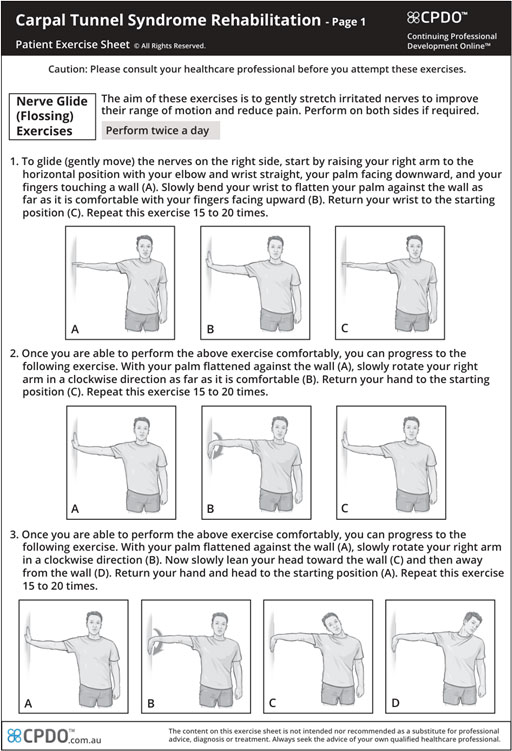
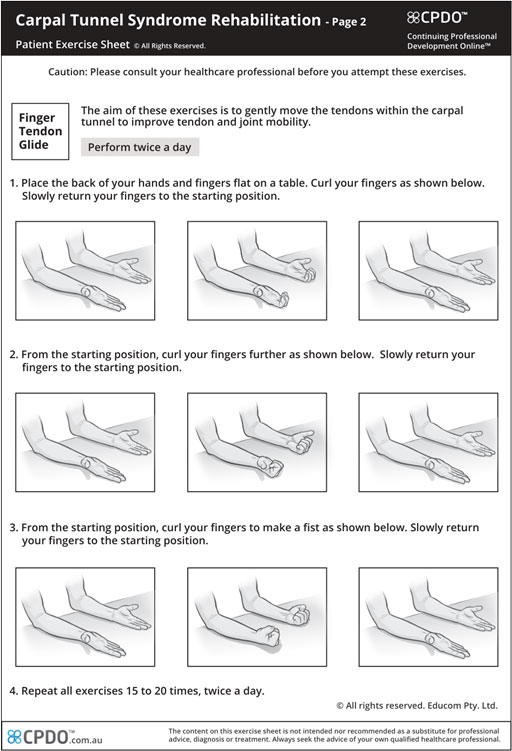
- Nerve and tendon gliding exercises.
- Manual therapy to the wrist, forearm, and cervical spine.
- Ergonomic assessment and activity modification.
- Education on wrist positioning.
Rehabilitation & Exercise
- Nerve glide exercises – gently move the median nerve through its range to improve mobility and reduce irritation.
- Finger tendon gliding exercises – reduce adhesions and improve flexor tendon movement within the carpal tunnel.
- Wrist and forearm stretching – to improve flexibility and reduce tension.
- Ergonomic correction – of keyboard, mouse, and sleeping position.
- Night splinting instruction – to maintain a neutral wrist position during sleep.
Specialist & Regenerative Medicine Options
- Corticosteroid Injections – injection into the carpal tunnel provides effective short-to-medium-term relief from median nerve compression.
- Platelet Rich Plasma (PRP) Therapy – emerging evidence supports ultrasound-guided PRP injection for sustained relief of carpal tunnel syndrome symptoms.
- Hydrodissection – image-guided injection of fluid around the median nerve to release adhesions and improve nerve mobility.
- Surgical Referral – for severe or progressive carpal tunnel syndrome unresponsive to conservative and injection-based management; carpal tunnel release surgery can be facilitated through our specialist network.
Our sports and exercise physicians at Prestidge work alongside your treating clinician to determine the most appropriate option for your condition, goals, and stage of recovery. All injectable and prescription treatments are subject to individual clinical assessment. Visit healthweave.com.au or prestidge.com.au to learn more.
Important: All specialist consultations, prescription treatments, and injectable procedures are subject to individual clinical assessment by a registered medical practitioner. Suitability, benefits, and risks will be discussed at your consultation. No outcomes are guaranteed. Prescription medicines are only available following appropriate medical review in accordance with TGA and AHPRA requirements. Exercise programs should be performed only as directed by your Healthweave clinician. Exercise images © CPDO / Educom Pty. Ltd. — used under licence.