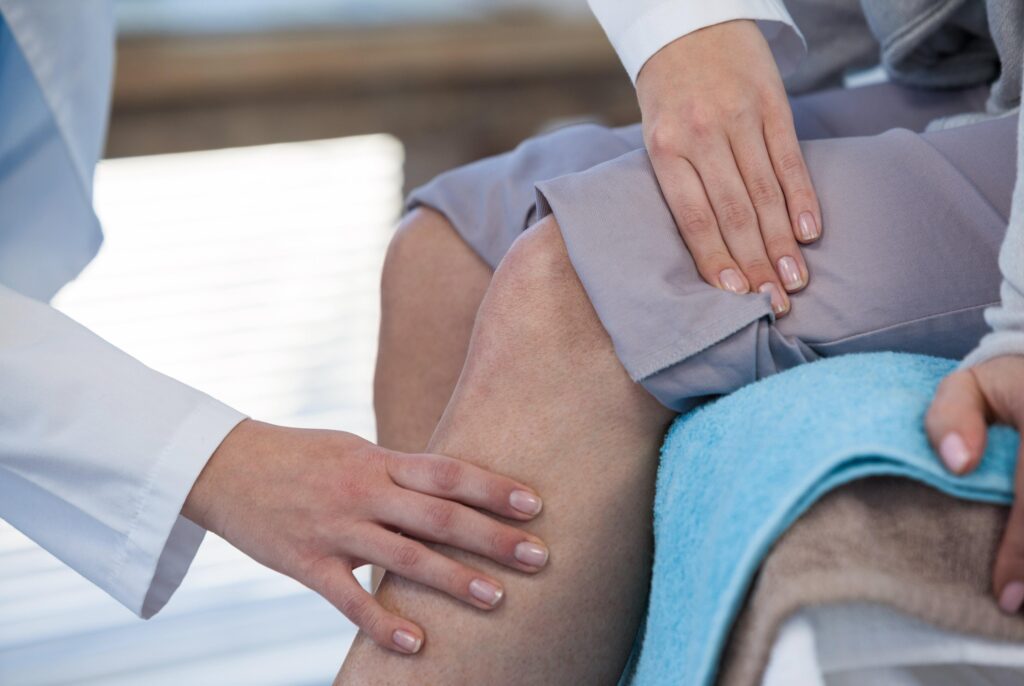
Patellar Tendinopathy (Jumper's Knee)
Patellar Tendinopathy (Jumper’s Knee) causes pain and degeneration of the patellar tendon from repetitive overloading. Progressive tendon loading, strengthening, rehabilitation, and activity modification promote recovery and return to sport.
Understanding Patellar Tendinopathy
Patellar tendinopathy, often called Jumper's Knee, involves degeneration and pain of the patellar tendon — the tendon that connects the kneecap to the shinbone. It is caused by repetitive loading that exceeds the tendon's capacity to recover, leading to collagen disorganisation and progressive tendon degeneration. It is common in jumping and running sports, and can significantly limit activity.
Causes
- Repetitive jumping, running, or kicking
- Sudden increase in training load or intensity
- Muscle imbalances — tight quadriceps, weak hip musculature
- Inadequate recovery time between training sessions
- Poor footwear or hard training surfaces
Symptoms
- Pain at the front of the knee — at or just below the kneecap
- Pain that begins with activity and worsens with continued loading
- Stiffness in the morning or after prolonged sitting
- Tenderness on direct palpation of the patellar tendon
- In severe cases: pain with all activity and walking
Treatment
- Progressive tendon loading program — the cornerstone of treatment
- Activity modification — not complete rest
- Manual therapy and soft tissue treatment
- Pain management strategies
- Footwear and training surface assessment
Rehabilitation & Exercise
Caution: Perform all exercises only as directed by your Healthweave clinician. Stop any exercise that increases your pain and inform your practitioner. Exercise programs are tailored to individual needs and must not be self-prescribed.
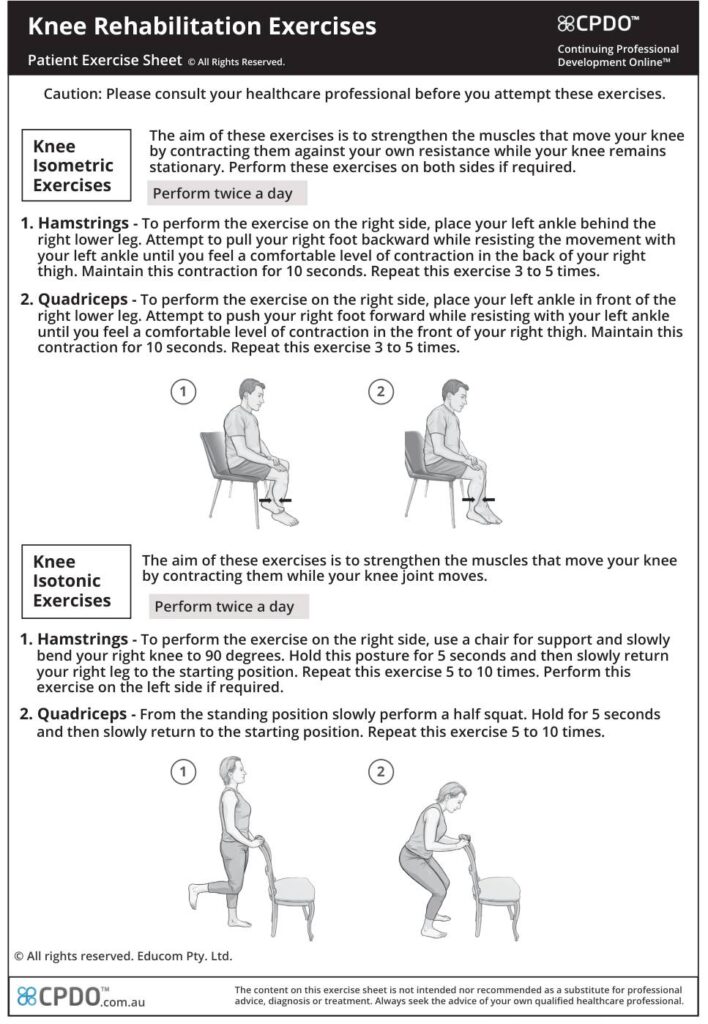
Tendon rehabilitation requires a carefully staged loading program. Isometric exercises (contracting without movement) are particularly effective for pain relief and are typically used in the early phase. Your clinician will guide the pace of progression.
- Isometric quadriceps holds — loading the patellar tendon without movement for sustained pain relief
- Eccentric and heavy slow-resistance quadriceps exercises — the most evidence-supported approach to tendon rehab
- Hip and gluteal strengthening to reduce knee load during activity
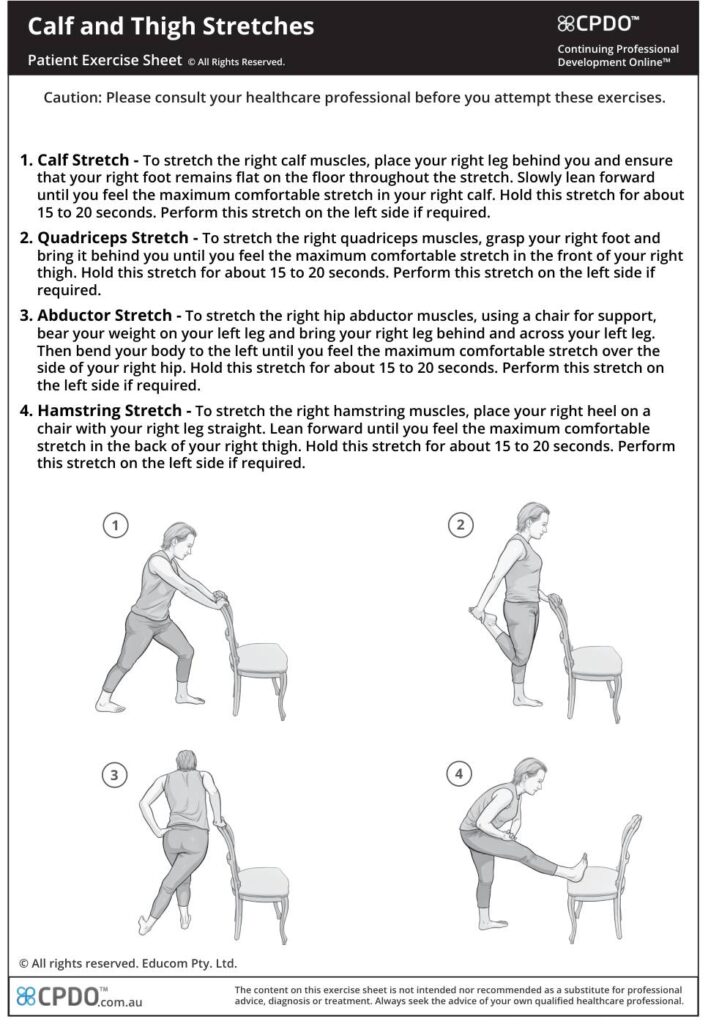
- Calf and thigh stretching
- Progressive return to sport with load monitoring
Specialist & Regenerative Medicine Options
For chronic patellar tendinopathy (lasting beyond 3 months) or significant tendon degeneration on imaging, our Prestidge sports physicians can offer targeted treatments to stimulate tendon healing.
- Platelet Rich Plasma (PRP) Therapy — Ultrasound-guided PRP injection into the degenerated tendon delivers growth factors that may support collagen repair. This is one of the most evidence-supported regenerative treatments for tendinopathy.
- High-Volume Injection (HVI) — Large-volume injection around the tendon to address abnormal tissue changes.
- Dry Needling under Ultrasound (Tenotomy/Fenestration) — Image-guided needling to stimulate a healing response within degenerated tissue.
- Prolotherapy — Injection to support the patellar tendon-bone attachment.
- Peptide Therapy — Where clinically appropriate and following individual medical assessment, certain prescribed peptides may support tendon repair. A valid prescription is required.
- Corticosteroid Injections — Used very cautiously and only in select presentations.
Our sports and exercise physicians at Prestidge work alongside your treating clinician to determine the most appropriate option for your condition, goals, and stage of recovery. All injectable and prescription treatments are subject to individual clinical assessment. Visit healthweave.com.au or prestidge.com to learn more.
Important: All specialist consultations, prescription treatments, and injectable procedures are subject to individual clinical assessment by a registered medical practitioner. Suitability, benefits, and risks will be discussed at your consultation. No outcomes are guaranteed. Prescription medicines are only available following appropriate medical review in accordance with TGA and AHPRA requirements. Exercise programs should be performed only as directed by your Healthweave clinician. Exercise images © CPDO / Educom Pty. Ltd. — used under licence.