
Tarsal Tunnel Syndrome
Understanding Tarsal Tunnel Syndrome
Tarsal Tunnel Syndrome occurs when the posterior tibial nerve is compressed as it passes through the tarsal tunnel on the inner side of the ankle — the space formed between the ankle bones and the overlying flexor retinaculum. It is the foot and ankle equivalent of carpal tunnel syndrome in the wrist, and causes characteristic burning, tingling, and numbness in the foot.
Causes
- Flat feet or over-pronation placing tension on the tarsal tunnel.
- Local injury or swelling around the ankle.
- Varicose veins or space-occupying lesions near the tunnel.
- Inflammatory conditions – rheumatoid arthritis and diabetes.
- Ill-fitting footwear.
Symptoms
- Burning pain, tingling, and numbness on the inner ankle and heel, sometimes extending to the toes.
- Symptoms worsening with prolonged standing or walking.
- Relief with rest and elevation.
- Pain that may be worse at night.
Treatment
Conservative management is effective for most presentations. Treatment addresses nerve irritation, compression, and contributing biomechanical factors.
- Orthotic support to correct flat feet and reduce nerve tension.
- Ankle and foot mobility exercises.
- Nerve gliding (neural mobilisation) exercises.
- Manual therapy to the ankle and foot.
- Footwear assessment and modification.
- Anti-inflammatory measures and activity modification.
Rehabilitation & Exercise
Caution: Perform all exercises only as directed by your Healthweave clinician. Stop any exercise that increases your pain and inform your practitioner. Exercise programs are tailored to individual needs and must not be self-prescribed.
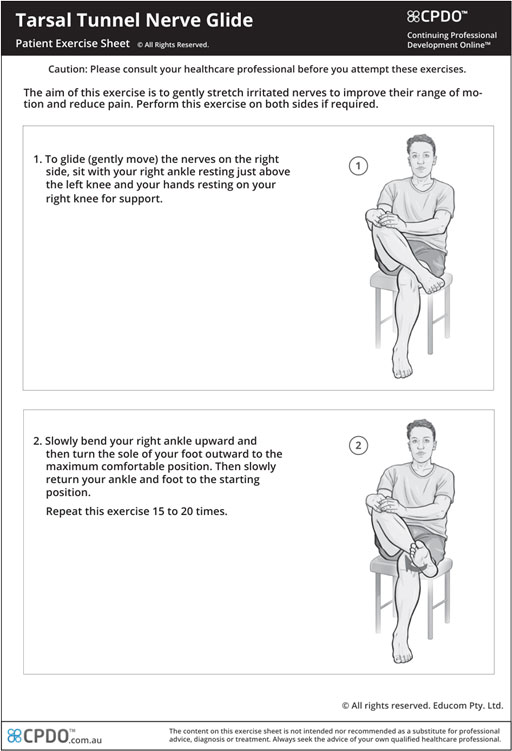
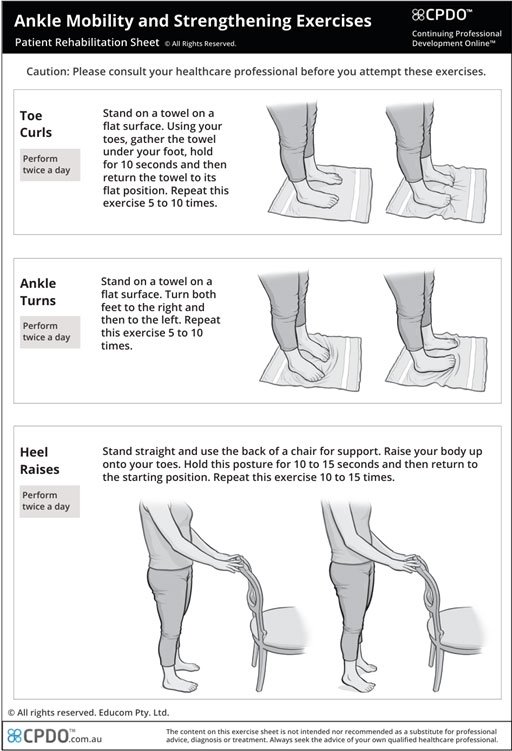
Rehabilitation for tarsal tunnel syndrome includes nerve gliding exercises to restore nerve mobility, correction of foot posture, and ankle strengthening. All neural mobilisation exercises should remain pain-free.
- Tarsal tunnel nerve glide exercises – to gently mobilise the posterior tibial nerve.
- Ankle mobility exercises – to improve joint flexibility and movement.
- Foot and arch strengthening – to improve support and reduce stress on the tarsal tunnel.
- Orthotic fitting – to correct flat feet and improve foot alignment.
- Footwear modification and assessment – to reduce pressure and support optimal foot mechanics.
Specialist & Regenerative Medicine Options
Where tarsal tunnel syndrome does not respond to conservative care, our Prestidge sports physicians can offer targeted interventional treatments.
- Corticosteroid Injections – targeted injection near the posterior tibial nerve reduces local inflammation and nerve compression.
- Platelet Rich Plasma (PRP) Therapy – perineural PRP may support nerve healing and reduce neurogenic inflammation within the tarsal tunnel.
- Surgical Referral – for severe or progressive cases; surgical decompression of the tarsal tunnel can be facilitated.
Our sports and exercise physicians at Prestidge work alongside your treating clinician to determine the most appropriate option for your condition, goals, and stage of recovery. All injectable and prescription treatments are subject to individual clinical assessment. Visit healthweave.com.au or prestidge.com.au to learn more.
Prevention
- Wear well-fitted, supportive footwear.
- Use orthotics if you have flat feet or over-pronation.
- Maintain ankle mobility and foot strength.
- Manage body weight to reduce foot loading.
- Address inflammatory conditions that increase tarsal tunnel pressure.
Important: All specialist consultations, prescription treatments, and injectable procedures are subject to individual clinical assessment by a registered medical practitioner. Suitability, benefits, and risks will be discussed at your consultation. No outcomes are guaranteed. Prescription medicines are only available following appropriate medical review in accordance with TGA and AHPRA requirements. Exercise programs should be performed only as directed by your Healthweave clinician. Exercise images © CPDO / Educom Pty. Ltd. — used under licence.