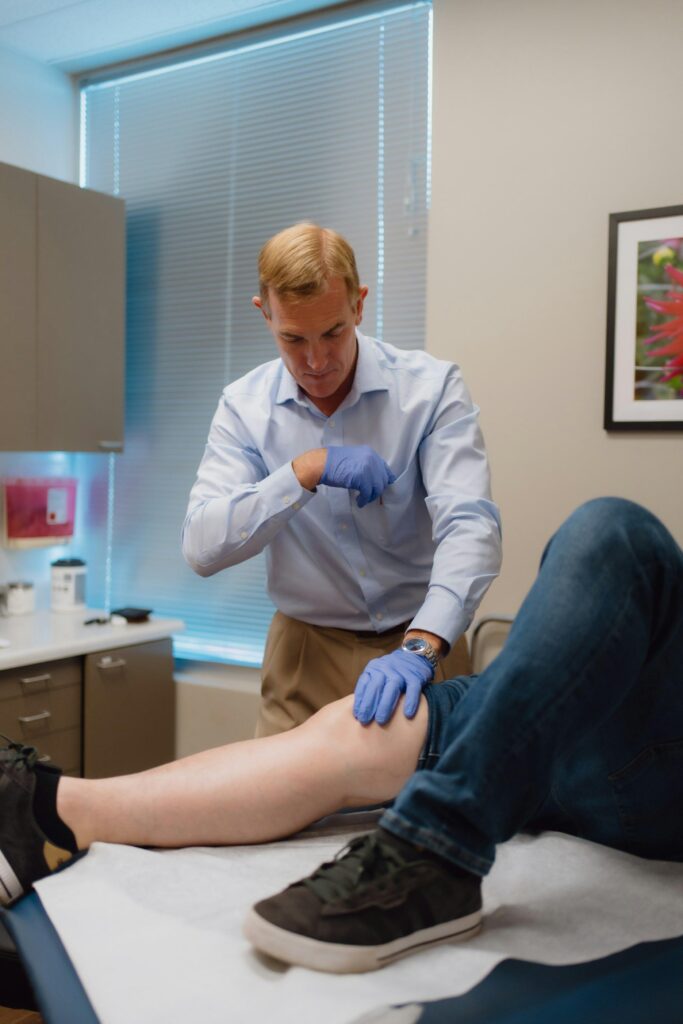
Knee Fat Pad Impingement (Hoffa's Syndrome)
Understanding Knee Fat Pad Impingement
Knee Fat Pad Impingement (Hoffa’s Syndrome) occurs when the infrapatellar fat pads — two wedge-shaped cushions beneath the kneecap — become irritated or pinched between the bones of the knee. The fat pad is highly sensitive and can become chronically inflamed with overuse or improper movement, leading to pain, swelling, and restricted motion.
Causes
- Incorrect torsional movements.
- Physical trauma or direct impact.
- Hyperextension injuries.
- Chronic inflammation or repetitive microtrauma.
Symptoms
- Pain on both sides of the patellar tendon.
- Knee Pain when extending or straightening.
- Discomfort during jumping, squatting, or prolonged standing.
- Grinding or creaking sounds (crepitus).
- Swelling or feeling of fullness beneath the kneecap.
Treatment
Specialist & Regenerative Medicine Options
- Corticosteroid Injections — A precisely targeted ultrasound-guided injection of corticosteroid into the inflamed fat pad provides rapid reduction of swelling and pain, enabling more effective physiotherapy.
- Platelet Rich Plasma (PRP) Therapy — Where chronic fibrosis or degeneration of the fat pad is present, PRP can stimulate tissue remodelling, reduce scarring, and support restoration of normal fat pad architecture.
- Hyaluronic Acid Injections — In cases where fat pad impingement coexists with early patellofemoral joint wear, intra-articular hyaluronic acid improves joint lubrication and offloads the fat pad.
- Image-Guided Needling / Fenestration — For fat pads with chronic fibrous change, ultrasound-guided needling can disrupt scar tissue and stimulate a renewed healing response.
- Stem Cell Therapy — In complex presentations with significant tissue degeneration, stem cell injections support regeneration and long-term tissue health.
Our sports and exercise physicians at Prestidge work alongside your treating clinician to determine which option best suits your condition, goals, and stage of injury. Image-guided
procedures are performed with precision and care. Visit prestidge.com.au to learn more about our full range of specialist services.
Important: All specialist consultations, prescription treatments, and injectable procedures are subject to individual clinical assessment by a registered medical practitioner. Suitability, potential benefits, and risks will be discussed during your consultation. No treatment outcomes are guaranteed. Prescription medicines — including testosterone and peptide therapies — are only available following appropriate medical review and a valid prescription in accordance with TGA and AHPRA requirements.
Prevention Tips
- Wearing shoes with proper arch support.
- Applying ice before and after activities if pain is present.
- Regular strength and flexibility exercises for hips, knees, and legs.
- Avoiding hyperextension and repetitive knee stress.