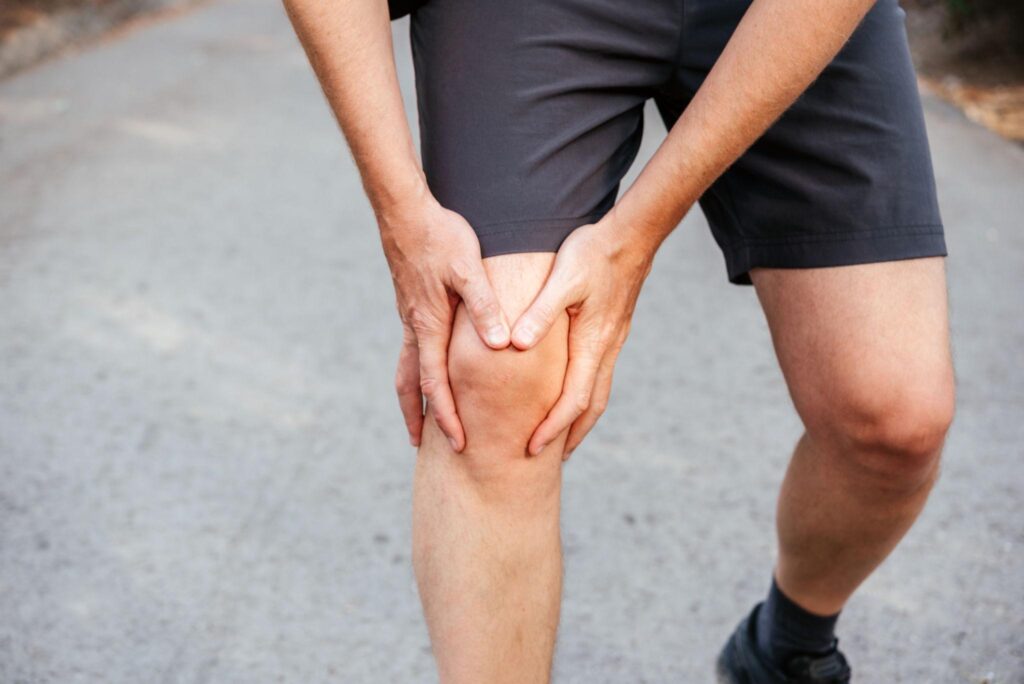
Patellofemoral Syndrome (Runner's Knee)
Specialist treatments require medical assessment. Benefits, risks, and suitability are discussed during consultation. Prescription therapies require valid medical review. Individual results cannot be guaranteed.
Understanding Patellofemoral Syndrome
Patellofemoral Syndrome (PFS), commonly called 'runner's knee,' describes pain or
discomfort felt around or behind the kneecap. It can affect anyone regardless of age or
activity level. It is often caused by muscle imbalances, poor foot alignment, repetitive
movements, or gluteal weakness.
Causes
- Trauma or Injury to the Knee
- Muscle Imbalances in the Thighs
- Poor Foot or Lower Limb Mechanics
- Repetitive Movements or Overuse
- Weakness in the Gluteal Muscles
Symptoms
- Pain or Discomfort Around the Kneecap
- Grinding or Popping Sound/Sensation
- Pain with Walking, Squatting, or Climbing Stairs
- Discomfort After Sitting for Long Periods
Treatment
Physical therapy targets underlying causes through corrective exercises, strengthening, and
manual therapy. Taping, orthotics, and footwear modification may also be used to support
recovery.
Specialist & Regenerative Medicine Options
While most cases of PFS resolve with physiotherapy, some patients — particularly those
with associated cartilage damage or joint degeneration — benefit from regenerative
medicine to address structural changes and provide durable pain relief.
- Platelet Rich Plasma (PRP) Therapy — Where patellofemoral syndrome is associated with cartilage softening (chondromalacia patella) or early joint degeneration, PRP injected into the patellofemoral joint reduces inflammation, supports cartilage health, and provides durable pain relief.
- Hyaluronic Acid (Viscosupplementation) — Improving lubrication within the patellofemoral joint reduces friction between the kneecap and the femoral groove, providing pain relief and improving joint mechanics.
- Corticosteroid Injections — Useful for acute inflammatory flares that are limiting rehabilitation, particularly where significant synovitis or joint effusion is present.
- Prolotherapy — In cases where patellofemoral instability is driven by ligamentous laxity, prolotherapy to the lateral retinaculum and supporting structures can improve patellar tracking.
- Stem Cell Therapy — For patients with documented chondromalacia and early cartilage damage, stem cell injections can support cartilage repair and delay the progression toward more significant joint degeneration.
Our sports and exercise physicians at Prestidge work alongside your treating clinician to determine which option best suits your condition, goals, and stage of injury. Image-guided
procedures are performed with precision and care. Visit prestidge.com to learn more about our full range of specialist services.
Important: All specialist consultations, prescription treatments, and injectable procedures are subject to individual clinical assessment by a registered medical practitioner. Suitability, potential benefits, and risks will be discussed during your consultation. No treatment outcomes are guaranteed.
Prescription medicines — including testosterone and peptide therapies — are only available following appropriate medical review and a valid prescription in accordance with TGA and AHPRA
requirements.
Prevention Tips
Maintain strong and balanced muscles around the hips, thighs, and knees. Always warm up before and stretch after activity. Incorporate cross-training to prevent overuse.