
Hip Bursitis (Trochanteric Bursitis)
Understanding Hip Bursitis
Causes
- Tight hip flexors and IT band creating friction over the bursa
- Weak gluteal muscles altering hip mechanics
- Repetitive activity — running, prolonged sitting then exercise
- Over-pronation or flat feet increasing hip strain
- Direct trauma to the outer hip
Symptoms
- Aching, burning pain on the outer hip
- Pain worse when lying on the affected side
- Disturbed sleep due to hip pain
- Discomfort climbing stairs or getting up from a chair
- Tenderness when pressing directly over the greater trochanter
Diagnosis
Treatment
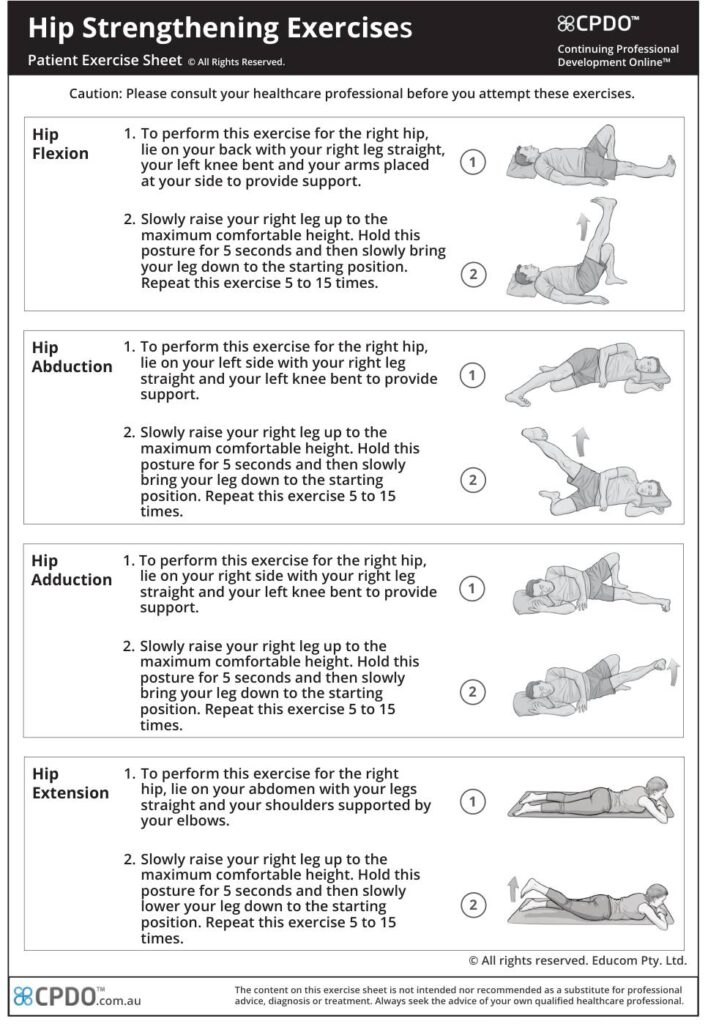
- Gluteal and hip strengthening exercises
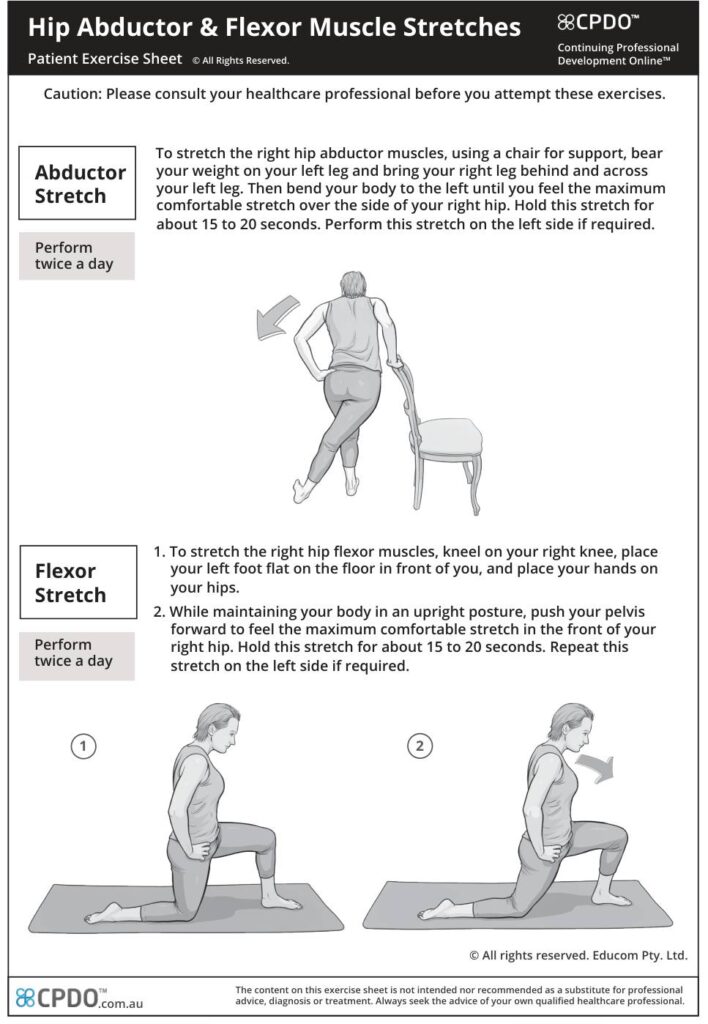
- IT band and hip flexor stretching
- Load management and activity modification
- Taping or bracing for temporary relief
- Postural correction and sleeping position advice
Rehabilitation & Exercise
Caution: Perform all exercises only as directed by your Healthweave clinician. Stop any exercise that increases your pain and inform your practitioner. Exercise programs are tailored to
individual needs and must not be self-prescribed.
Rehabilitation for hip bursitis focuses on correcting the muscle imbalances that cause bursal
irritation. Avoid compressive hip positions — such as crossing legs or lying directly on the
affected hip — during recovery.
- Hip abductor and gluteal strengthening to restore lateral hip stability
- IT band and hip flexor stretching to reduce tension over the bursa
- Core and lumbopelvic stabilisation exercises
- Activity modification and step-count management
- Sleeping posture modification — use a pillow between the knees when side-lying
Specialist & Regenerative Medicine Options
- Corticosteroid Injections — Ultrasound-guided injection directly into the inflamed bursa provides effective short-term relief and allows rehabilitation to progress.
- Platelet Rich Plasma (PRP) Therapy — For chronic bursitis, PRP may reduce ongoing inflammation and support healing of surrounding soft tissues.
- Hyaluronic Acid — Where hip joint involvement contributes to symptoms, viscosupplementation can improve joint mechanics and reduce secondary bursal irritation.
Important: All specialist consultations, prescription treatments, and injectable procedures are subject to individual clinical assessment by a registered medical practitioner. Suitability, benefits, and risks will be discussed at your consultation. No outcomes are guaranteed. Prescription medicines are only available following appropriate medical review in accordance with TGA and AHPRA requirements. Exercise programs should be performed only as directed by your Healthweave clinician. Exercise images © CPDO / Educom Pty. Ltd. — used under licence.
Prevention Tips
- Maintain consistent hip and core strengthening
- Take regular movement breaks from prolonged sitting
- Warm up appropriately before exercise
- Address running technique and footwear with a clinician
- Seek early assessment — trochanteric bursitis responds best to early treatment